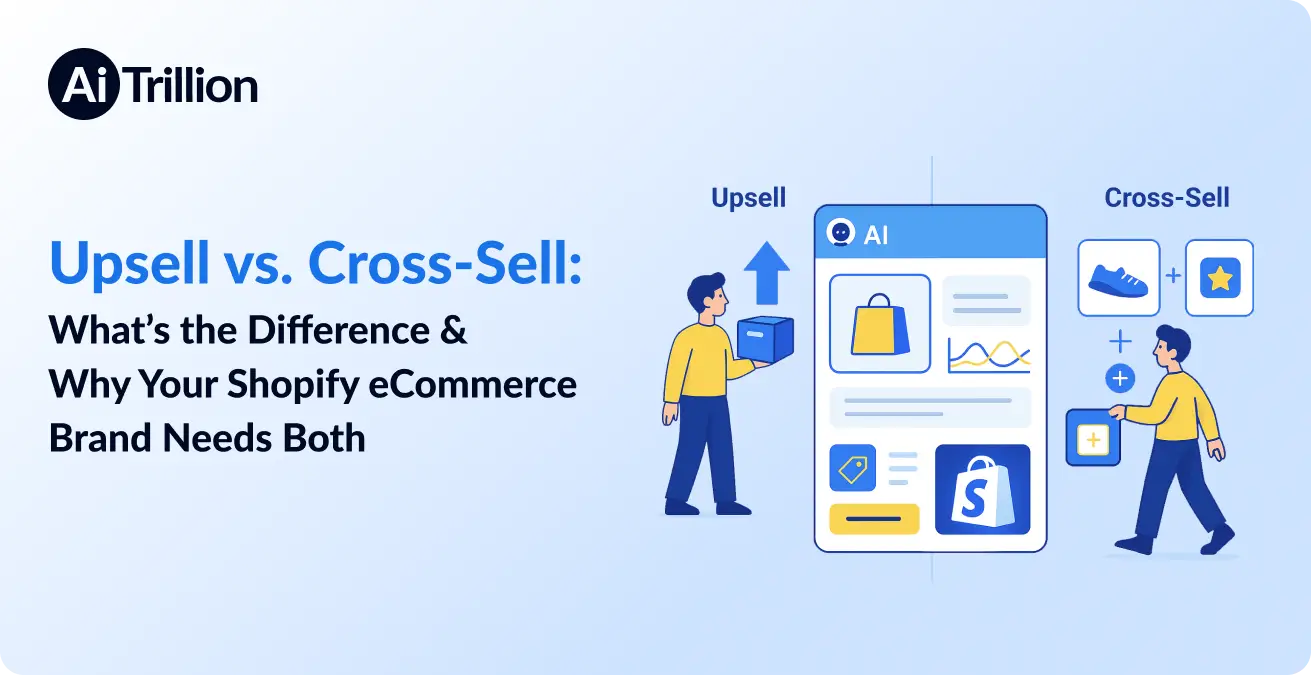
When I first started working with eCommerce brands, one thing became crystal clear: most Shopify stores were leaving money on the table simply because they weren’t using upsell vs cross-sell eCommerce strategies effectively.
Over the years, my team and I at AiTrillion have seen how the right mix of upselling and cross-selling can boost Shopify store sales with upsell cross-sell tactics, dramatically increase average order value in eCommerce, and build stronger customer relationships.
According to a report from Inc42, upselling alone can increase a customer’s lifetime value by 20–40%, a number too significant for any brand to ignore.
From my experience working with Shopify, WooCommerce, and custom online eCommerce brands, I can confidently say that these strategies aren’t just “nice-to-haves.” They are essential growth levers.
In this blog, I’ll break down the difference between upselling and cross-selling, share my personal experiences implementing these strategies, and give you actionable upselling and cross-selling best practices you can start using today.
What is Upselling?
Upselling is one of the most powerful sales tactics in Shopify stores. It’s not about pushing products, it’s about helping customers discover better versions of what they’re already interested in. Think of it as guiding them toward a smarter choice.
For example, if a customer is buying a basic laptop, suggesting a model with double the memory or faster performance is a classic eCommerce upsell example.
I’ve noticed that upselling works best when it feels like a natural extension of the shopping journey, not a sales pitch. Customers appreciate being informed about options they didn’t know existed, especially if the recommendation is personalized.
Benefits of Upselling
Here are the top 5 benefits of upselling that I’ve seen consistently across eCommerce businesses:
1. Increase Average Order Value (AOV): Upselling helps you increase average order value in your Shopify store without additional ad spend.
2. Showcase Premium Products: Many shoppers are unaware of upgraded versions; upselling gives them visibility.
3. Build Customer Trust: Recommending upgrades that genuinely solve problems creates long-term loyalty.
4. Boost Profit Margins: Higher-value products usually mean higher margins, improving overall profitability.
5. Increase Customer Satisfaction: When customers get a product that better suits their needs, they’re more likely to return.
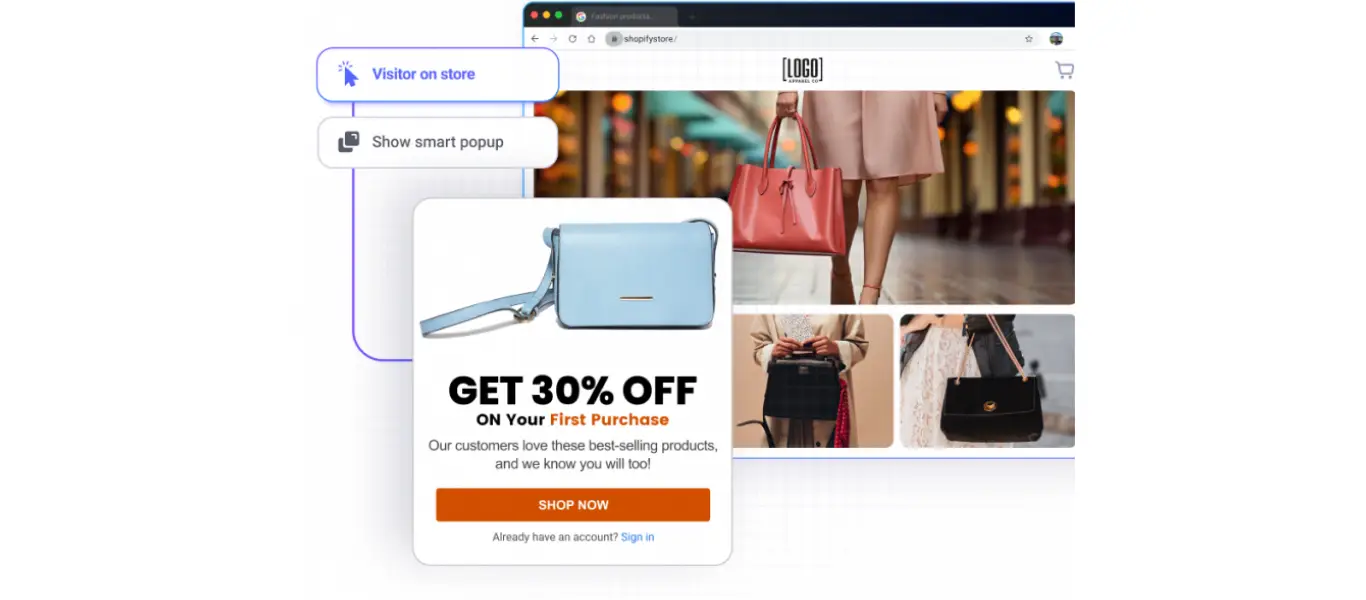
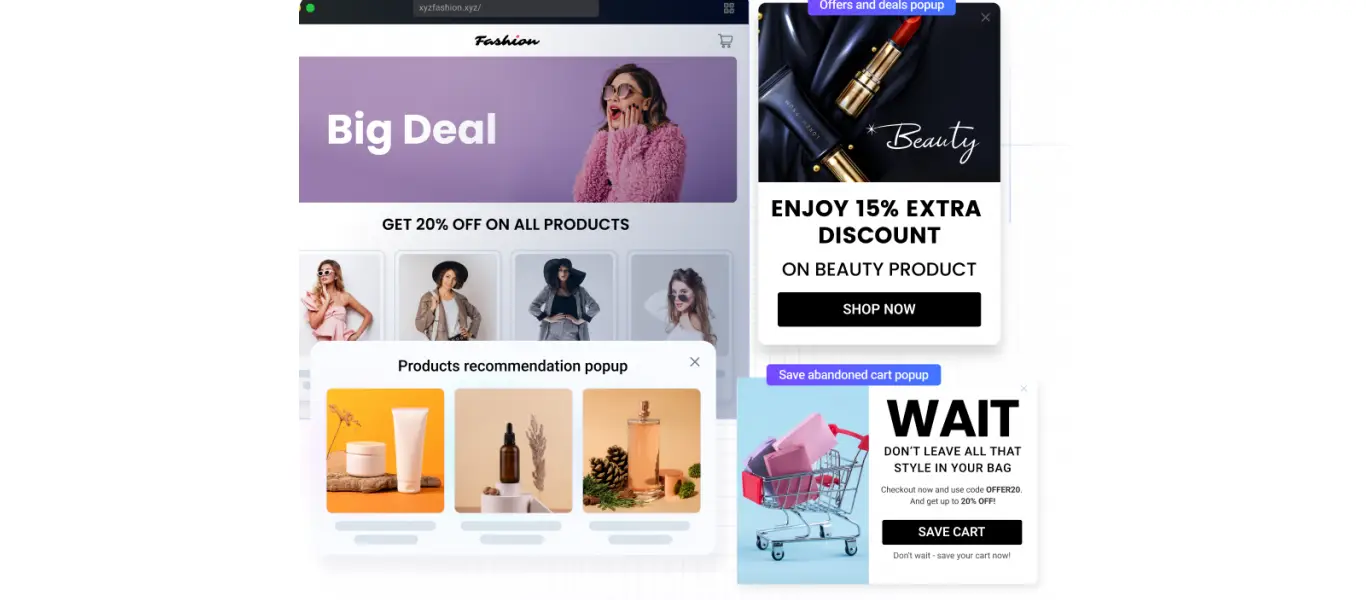
I personally recommend introducing upsell triggers in eCommerce automation, such as smart pop-ups, cart-page suggestions, or AI-driven personalization.
To streamline this, you can use the best Shopify product recommendations apps, which automate upselling directly on product pages, in the cart, and even in post-purchase flows.
What is Cross-Selling?
Cross-selling is one of those strategies that feels almost invisible when done right, but its impact on sales is massive. It’s all about suggesting complementary products that increase the value of the customer’s main purchase.
Instead of pushing an upgrade, you’re helping the shopper get more out of what they’re already buying.
For example, If a customer buys a camera, recommending a tripod, lens cleaner, or memory card is a cross-selling technique that online eCommerce brand owners rely on.
From my experience working with Shopify store brands, cross-selling isn’t just about making an extra sale; it’s about creating a complete shopping experience.
Customers often thank you for reminding them of items they actually need but might have forgotten.
Benefits of Cross-Selling
Here are the top 5 benefits of cross-selling I’ve consistently seen:
1. Increase Cart Size Naturally: Adding relevant suggestions helps customers spend more without feeling pressured.
2. Improve Customer Experience: Shoppers love it when Shopify store brands anticipate their needs and provide helpful product pairings.
3. Boost Repeat Purchases: Customers who buy complementary products are more likely to return, as they see your Shopify store as reliable and resourceful.
4. Strengthen Brand Authority: By recommending logical pairings, your eCommerce brand looks like an expert in the customer’s eyes.
5. Increase Loyalty and Trust: Smart cross-selling creates a sense of convenience, encouraging customers to stay with your brand longer.
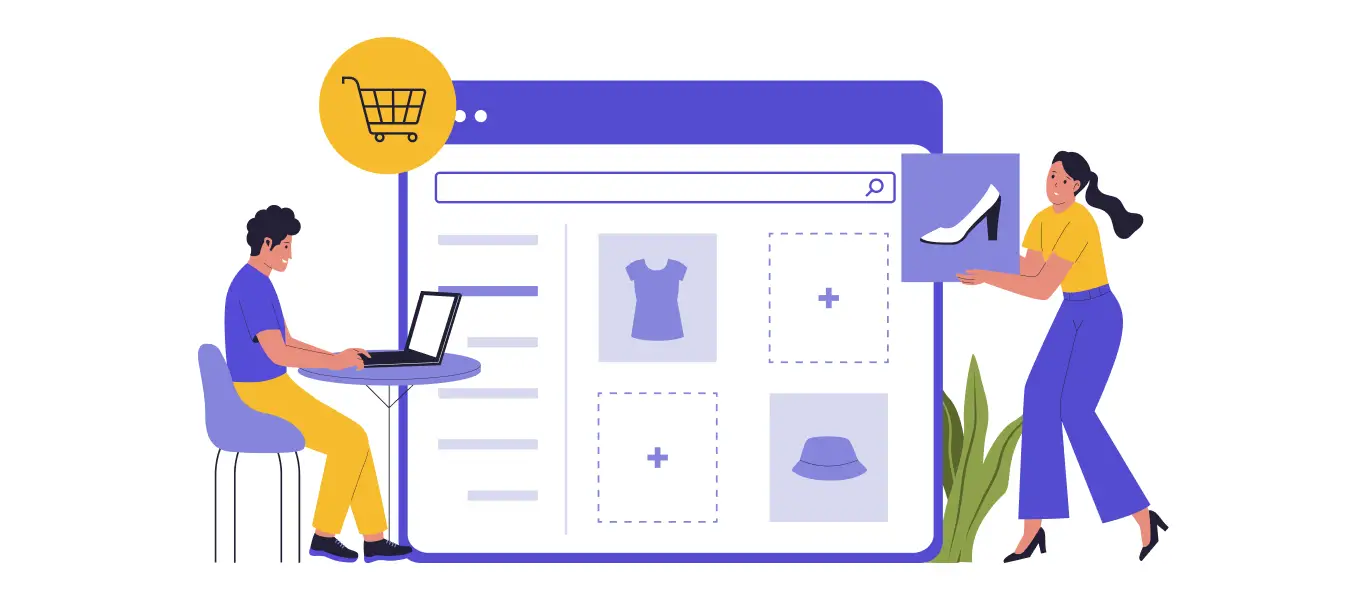
Personally, I’ve seen the best results with cross-selling on product pages and at checkout. “Frequently Bought Together” or “Complete the Look” widgets often drive higher conversions because customers are already in purchase mode.
If you’re adding “Frequently Bought Together” or new arrivals, check out our blog: Top 5 Locations to Place Product Recommendations on Your Shopify Store That Actually Convert.
Upsell vs. Cross-Sell: Key Differences
At first glance, upsell vs cross-sell eCommerce strategies may look similar; they both aim to increase revenue.
But the real difference lies in how they influence the customer journey.
Upselling focuses on upgrading the main product, while cross-selling enhances the purchase with complementary items.
Both strategies play different psychological roles in a shopper’s decision-making process.
Here’s a quick product recommendation, upsell vs cross-sell breakdown:
| Aspect | Upselling | Cross-Selling |
| Definition | Suggesting a higher-value product upgrade | Suggesting complementary products |
| Example | Upgrading from 128GB iPhone to 256GB iPhone | Adding AirPods with an iPhone purchase |
| Goal | Increase order value through better version | Increase order value with add-ons |
| Customer Perception | “I’m getting a better version” | “I’m getting more complete usage” |
| Placement | Product page, cart, checkout | Product page, cart, post-purchase email |
Why You Need Both in Your eCommerce Strategy
When eCommerce brands ask me why, I always explain that the benefits of upselling and cross-selling go far beyond just bigger cart sizes. These strategies shape customer perception, loyalty, and long-term profitability.
Here are the top 5 reasons you need both:
1. Boost Sales from Different Buying Behaviors
Some customers prefer premium upgrades, while others look for add-ons. Combining upsells and cross-sells ensures you capture both audiences and boost Shopify sales with upsell and cross-sell tactics.
2. Increase Customer Retention
From my experience, shoppers feel valued when you suggest relevant options. This strengthens customer retention, upselling cross-selling and builds trust over time.
3. Balance Revenue and Loyalty
It’s not about aggressive selling, it’s about being helpful. Smart AI product recommendations improve AOV while also keeping customers happy.
4. Improve Conversion Rates
Using both strategies covers multiple touchpoints in the journey. This naturally increases upsell vs cross-sell conversion rates, because you’re guiding different types of purchase intent.
5. Deliver a Better Shopping Experience
Upselling introduces better versions, while cross-selling creates completeness. Together, they make customers feel they’ve made smarter, more satisfying choices.
In my consulting projects, the Shopify store brands that combine both strategies consistently see higher lifetime value compared to those relying on just one.
Best Practices for Upselling in eCommerce
Upselling has always been one of my favorite growth levers because it doesn’t feel like selling, it feels like guiding.
Over the years, working with Shopify and WooCommerce eCommerce brands, I’ve realized that the best upselling strategies for eCommerce 2025 are not about offering “more expensive” items, but about offering better value.
Here are the top 5 best practices for upselling that I recommend:
1. Personalized Recommendations
Use customer behavior data, like browsing history or past purchases, to recommend upgrades that truly fit their needs. Shoppers are far more likely to accept an upsell when it feels tailor-made.
For a deeper dive into how AI can automate this process, check out our guide on AI product recommendations for Shopify stores.
2. Bundle Premium Add-Ons
Instead of pitching a single high-priced product, create bundles that highlight extra value, like “Pro Plan + Free Installation” or “Skincare Set with Bonus Serum.” Bundles feel like a deal, not an upsell.
3. Limited-Time Offers
Scarcity motivates decisions. Offering an upgrade discount available only during checkout creates urgency and significantly boosts acceptance rates.
4. Use Social Proof
Product reviews, ratings, and “most popular choice” labels build trust instantly. I’ve seen Shopify store brands lift upsell conversions by simply adding testimonials that highlight why the upgrade is worth it.
If you want to explore the top tools for collecting and showcasing reviews, read our blog on the Best product reviews apps for Shopify in 2025.
5. A/B Test Everything
Upsells that work for one eCommerce brand may flop for another. Test placement (product page, cart, checkout), button text, and even imagery. Small tweaks often make a big difference in upsell vs cross-sell conversion rates.
From my perspective, the best upsells feel like recommendations from a friend. If you guide customers toward a better choice with honesty and clarity, you’ll see both sales and loyalty grow.
Best Practices for Cross-Selling in eCommerce
Cross-selling is about making your customer’s purchase more complete, not just bigger. From my experience, the most effective cross-selling techniques online eCommerce brand owners use are the ones that feel like helpful suggestions rather than sales pitches.
Here are the top 5 best practices for cross-selling:
1. Create Bundles & Kits
“Starter kits” or “Complete the Look” bundles work wonders. For example, a camera with a memory card and a tripod, or a skincare cleanser paired with toner and moisturizer. Bundles show customers the full solution in one place.
2. Cross-Selling on Product Pages
Placing a “Frequently Bought Together” section right under the add-to-cart button is one of the most effective placements I’ve seen. It catches customers while they’re already considering a purchase.
3. Checkout & Post-Purchase Cross-Sells
Customers in buying mode are more open to add-ons. Suggesting accessories, warranties, or complementary products at checkout or in post-purchase emails can significantly increase AOV.
4. Highlight New Arrivals or Seasonal Products
Use cross-selling to promote fresh stock or seasonal picks alongside a customer’s current choice. For example, recommending matching holiday accessories with apparel or suggesting trending items with electronics.
5. Use Discounts on Add-Ons
Incentivize customers to add more by offering small discounts on cross-sell items (e.g., “Add a laptop bag for 20% off”). From my experience, even a minor discount makes cross-sells feel like a value-driven choice.
I’ve seen the biggest wins with cross-selling on product pages and during checkout. Customers love it when you anticipate their needs; it feels like you’re saving them time.
Quick Comparison: Upselling vs Cross-Selling Best Practices
| Strategy | Upselling Example | Cross-Selling Example |
| Personalization | Suggesting a better laptop model | Suggesting a laptop bag with the laptop |
| Timing | Before or during checkout | During checkout or in post-purchase emails |
| Marketing Approach | Focused on an upgrade pitch | Focused on a complementary pitch |
| Value Proposition | “Get better performance for a little more.” | “Complete your purchase with these add-ons.” |
| Customer Experience | Makes customers feel they’re making a smarter choice | Makes customers feel their purchase is more complete |
Case Studies: Successful Upsell and Cross-Sell Strategies
FragrantBodyOilz – 113x Revenue Growth
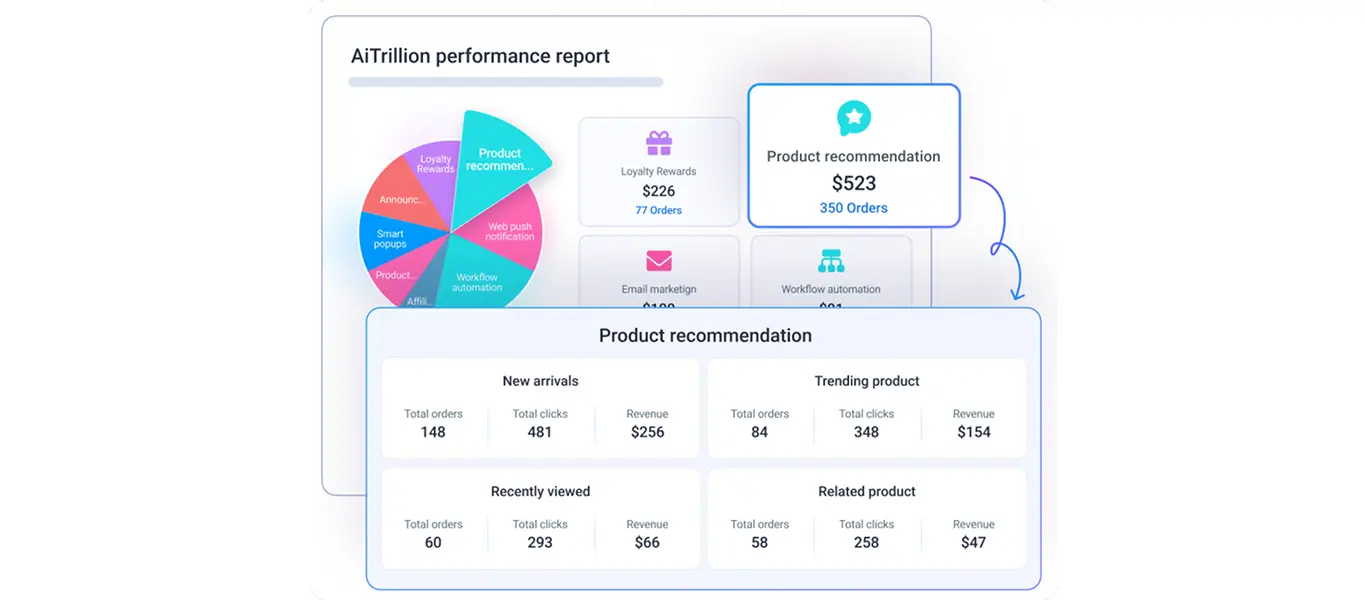
By using AiTrillion’s product recommendations, smart popups, and automation, the eCommerce brand achieved a 113x boost in revenue and significantly increased order conversions.
Zoff Foods – Shark Tank Brand’s Success
Zoff Foods saw 75% of conversions driven by product recommendations, proving the power of upsell and cross-sell strategies with AiTrillion’s 10 modules.
Conclusion
In today’s competitive eCommerce space, relying on discounts alone won’t win loyal customers. The real growth lies in guiding shoppers toward smarter choices with upselling and cross-selling.
When powered by a Shopify product recommendation program, these strategies not only increase average order value but also turn one-time buyers into repeat customers.
Want to unlock this potential for your Shopify store brand? Book a free demo with AiTrillion and see how personalized upsell and cross-sell journeys can transform your conversions.
Frequently Asked Questions (FAQ)
Question: What is the difference between cross-sell and upsell?
Answer: The difference between upselling and cross-selling is simple: upselling is about upgrading to a better version of the same product, while cross-selling suggests complementary items.
Question: What is the 25% rule of thumb for cross-selling?
Answer: I personally recommend following the 25% rule: your cross-sell should never increase the total cart value by more than 25% to avoid overwhelming the customer.
Question: Why is upselling and cross-selling important?
Answer: Because they deliver the benefits of upselling and cross-selling: higher revenue, better customer experiences, and stronger brand loyalty.
Question: Is upselling effective in e-commerce?
Answer: Yes! When you apply smart upsell and cross-sell marketing tips, upselling is highly effective and often outperforms other promotional tactics.
Question: Can the Best Shopify Upsell App work on mobile stores?
Answer: Yes! Most of the Best Shopify upsell apps are mobile‑optimized and designed to work smoothly on phones, tablets, and desktops.


Leave a Comment
You must be logged in to post a comment.