The Complete Guide to Automating WhatsApp Follow-Ups
Most leads never get a second message. Here's how to build WhatsApp follow-up sequences that run themselves.
Every business knows the feeling: a lead messages you on WhatsApp, you reply, and then… nothing. The conversation stalls, the moment passes, and a warm prospect quietly goes cold. The fix isn't hiring more people to chase replies — it's building follow-up sequences that run automatically, at the right time, with the right message.
Why follow-ups decide the sale
Studies of sales conversations repeatedly show the same pattern: the majority of deals are won somewhere between the second and fifth touch, yet most teams stop after the first. On WhatsApp — a channel people actually read — that gap is pure lost revenue. Automation closes it without adding headcount.
The goal isn't to spam. It's to be reliably present: a gentle nudge when someone goes quiet, a helpful answer before they ask, an offer that arrives exactly when intent is highest.
"A follow-up sent 24 hours later feels thoughtful. The same message sent a week later feels like a cold pitch. Timing is the message."
Mapping your follow-up sequence
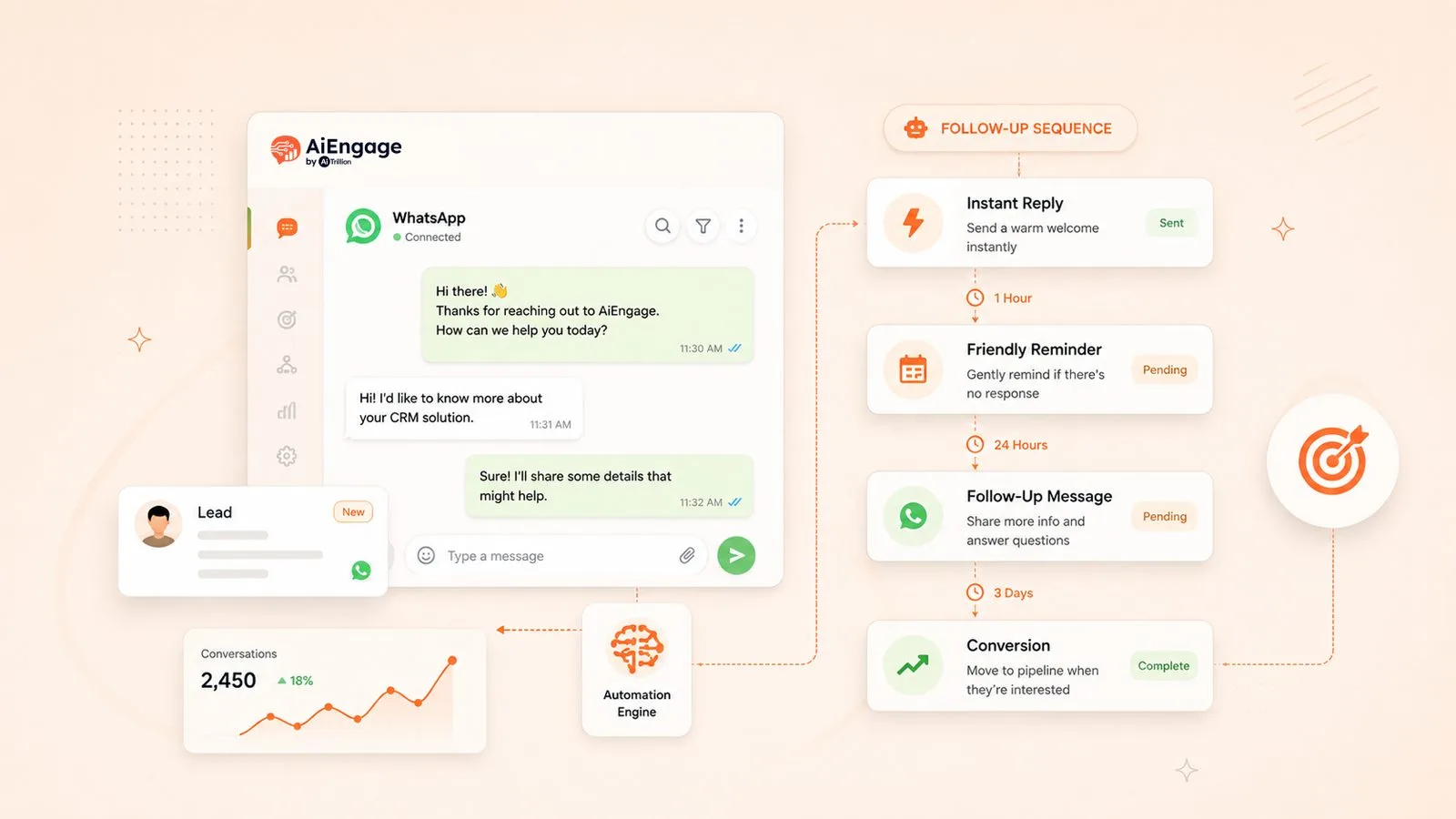
Before automating anything, sketch the journey a lead actually takes. A simple sequence for an inbound enquiry might look like this:
Instant acknowledgement the moment a lead messages, so no one waits.
A qualifying question that routes them to the right team or product.
A helpful follow-up if they go quiet for a few hours.
A thank-you and next step once they take action.
A feedback request and a tailored offer after the sale.
Keep each step doing one job
Overloaded messages get ignored. Each step in the chain should ask for exactly one thing — a reply, a click, a booking — so the reader always knows what to do next.
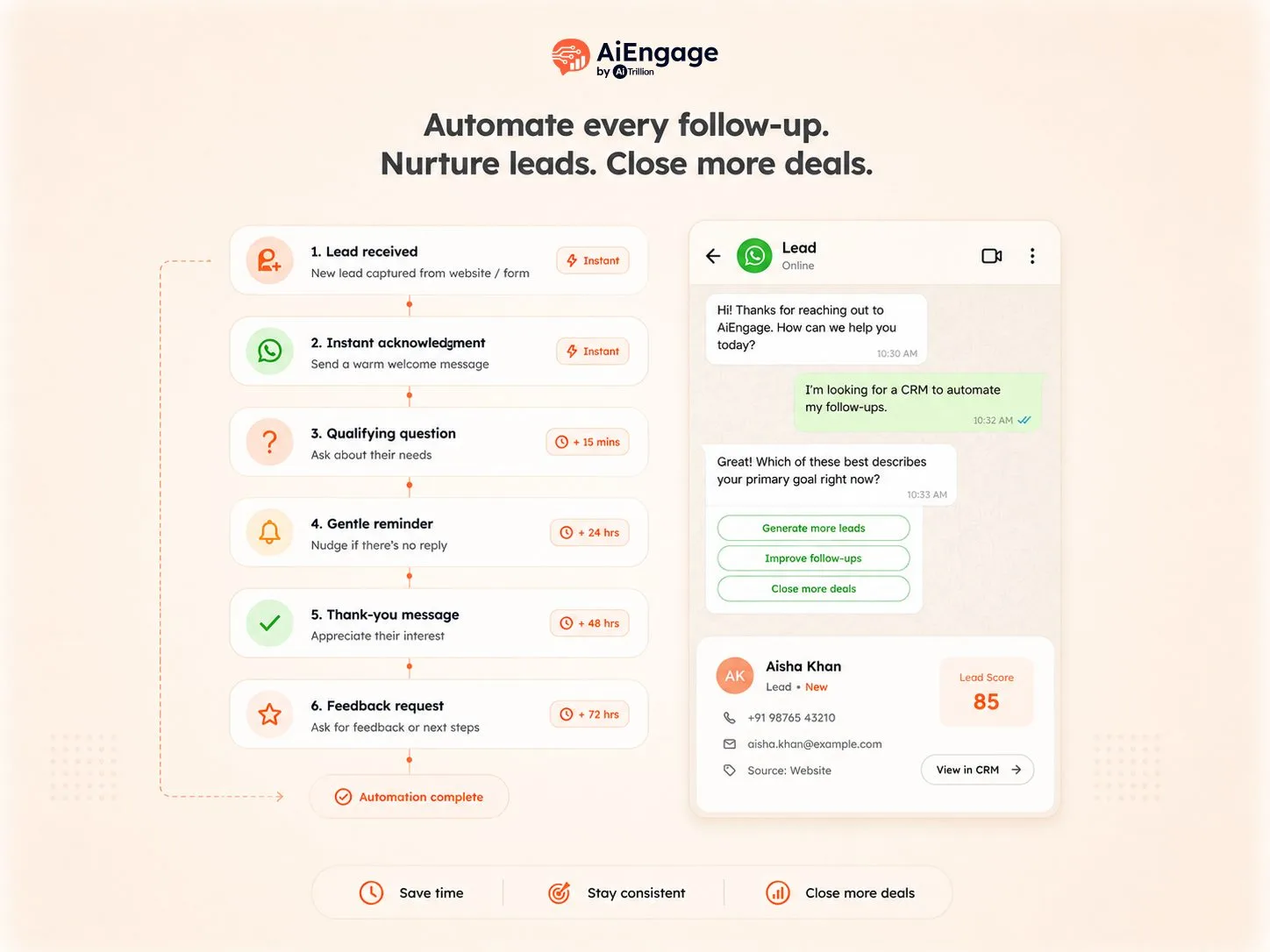
A five-step follow-up chain mapped inside the AiEngage automation builder.
Timing, tone, and templates
The WhatsApp Business API requires pre-approved templates for messages sent outside the 24-hour window. Treat that as a feature, not a limit: it forces you to write tight, reusable copy that you can trigger on a schedule.
💡 Key takeaway: Write your templates once, approve them, and let triggers do the sending. A well-built sequence should keep working whether you have ten leads a week or ten thousand.
Measuring what matters
Track response time, reply rate, and lead-to-customer conversion per sequence — not just messages sent. The point of automation is a better number at the bottom of the funnel, and those three metrics tell you whether your chain is earning its place.
Start small: automate one sequence, measure it for two weeks, then expand. The teams that win on WhatsApp aren't the ones sending the most messages — they're the ones sending the right message at the right moment, every time.

I help businesses simplify marketing, sales, and customer support through AI and automation. At AiEngage CRM, we bring lead management, WhatsApp, calling, email campaigns, meetings, and support into one connected platform. Our vision is to help businesses run smarter with AI, empowering teams to streamline everyday work, strengthen customer relationships, and drive sustainable growth.