Best CRM for Shopify Apps & Partner Agencies
Reyansh runs a nine-person Shopify agency. One night he lost a client he didn't even know he had.An App Store message from a merchant sat unread for three weeks…
- 1What to Look for in a CRM for Shopify Apps & Agencies
- 2How Leads Actually Move Without a Unified System
- 3Best CRMs for Shopify Apps & Partner Agencies — Compared
- 1. AiEngage CRM
- 2. HubSpot Sales Hub
- 3. Zoho CRM
- 4. Intercom
- 5. TeleCRM
- 4Real Results: What Agencies Say After Switching
- 5How to Choose the Right CRM Based on Your Agency's Size
- 6How to Migrate Your Agency's Leads to a New CRM
- 7Conclusion
- 8FAQs
- Which CRM works best with Shopify?
- Is AI going to replace CRM?
- Do you really need a CRM in 2026?
- How much does a CRM for a Shopify agency typically cost?
- Can a CRM connect directly with the Shopify App Store?
Reyansh runs a nine-person Shopify agency. One night he lost a client he didn't even know he had.
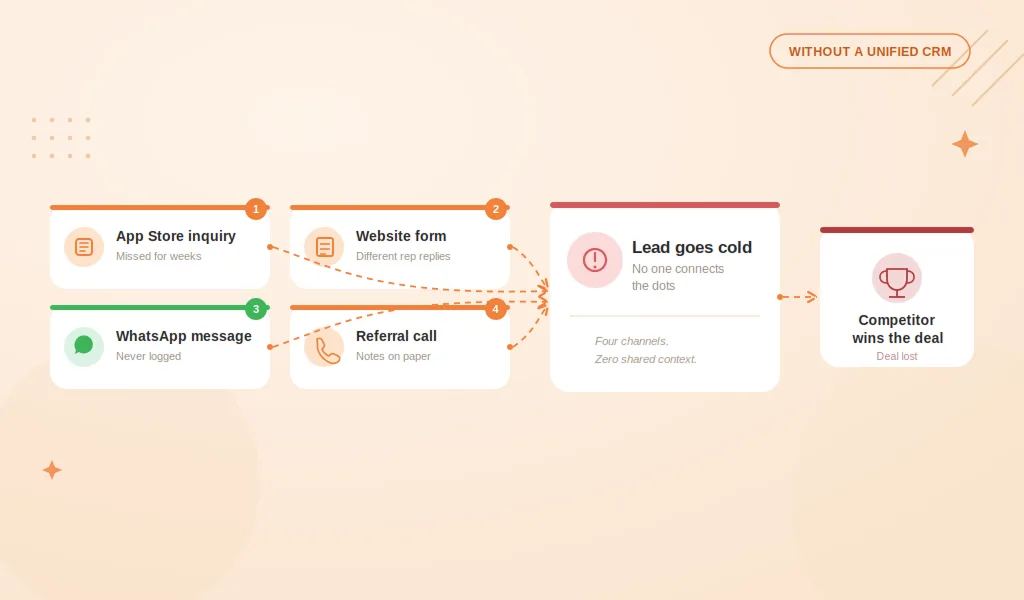
An App Store message from a merchant sat unread for three weeks. In that same window, the merchant also messaged the agency's website, then followed up over WhatsApp, and each message landed with a different teammate who had no idea the others existed.
By the time anyone connected the dots, the Shopify merchant had already hired someone else.
Nobody on that team was careless. This is just what happens once an agency outgrows a single inbox and a shared spreadsheet, and it's exactly why finding the best CRM for Shopify apps and partner agencies stops being optional past a certain size.
Below is what a real CRM for Shopify agencies and SaaS teams should actually do, five tools compared with real pricing, and a straightforward way to pick the right one for your team.
A good CRM for Shopify agencies and SaaS teams is really just a promise that no lead gets lost twice.
What to Look for in a CRM for Shopify Apps & Agencies
Before comparing tools, know what "good" looks like for this specific kind of business:
Multi-channel capture: WhatsApp, email, forms, and App Store inquiries in one inbox, not five.
Project-based pipelines: discovery, proposal, contract, and handoff each need their own stage.
Role-based access: sales, dev, and support shouldn't dig through each other's notes for context.
Shopify app developer CRM integration: it should plug into tools you already use.
CRM with Shopify App Store data sync: App Store inquiries should land in the same pipeline as everything else, not a separate dashboard.
AI-assisted follow-ups: busy teams forget to follow up; automation quietly fixes that.
Channel-conversion reporting: without this, you're guessing which source actually pays your bills.
A genuine B2B CRM for Shopify partner ecosystem setup checks most of these. Miss a few, and you're back to Reyansh's spreadsheet chaos.
And if your agency manages ongoing merchant accounts rather than one-off builds, an agency CRM for managing Shopify merchant clients needs to carry renewal dates and support history forward too, not just the first sale.
How Leads Actually Move Without a Unified System
Best CRMs for Shopify Apps & Partner Agencies — Compared
CRM | Starting Price | Best For |
|---|---|---|
AiEngage CRM | ₹1,799/month (Solo plan), 14-day free trial | Agencies wanting automation without a steep learning curve |
HubSpot Sales Hub | Free tier; Starter $15–20/seat/month, Professional ~$90–100/seat/month | Larger agencies wanting marketing + sales bundled |
Zoho CRM | Free for up to 3 users; Standard $14/user/month, Professional $23/user/month | Teams already using Zoho Books, Zoho Desk, etc. |
Intercom | Essential $29/seat/month (annual); Advanced $85/seat/month | Post-sale support layered onto an existing CRM |
TeleCRM | ₹799/user/month (billed annually) | Call and WhatsApp-heavy sales teams |
1. AiEngage CRM
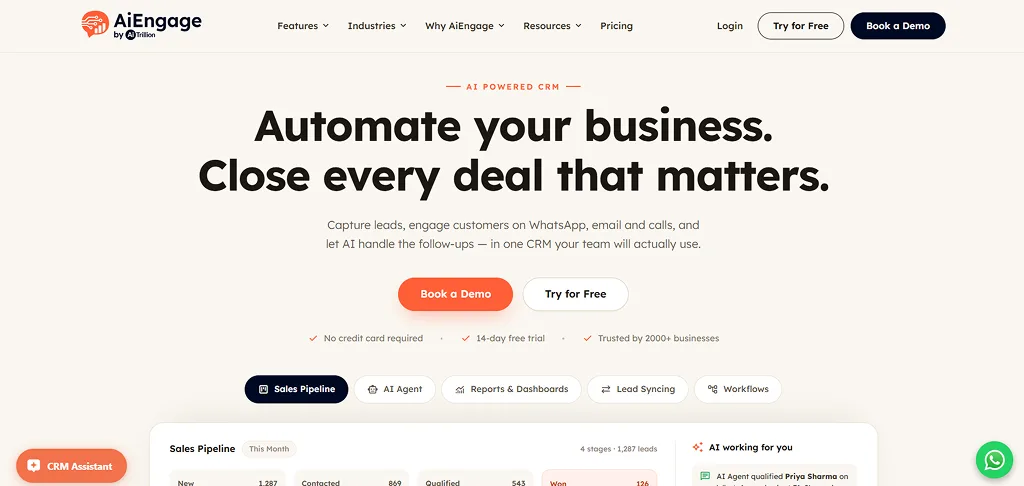
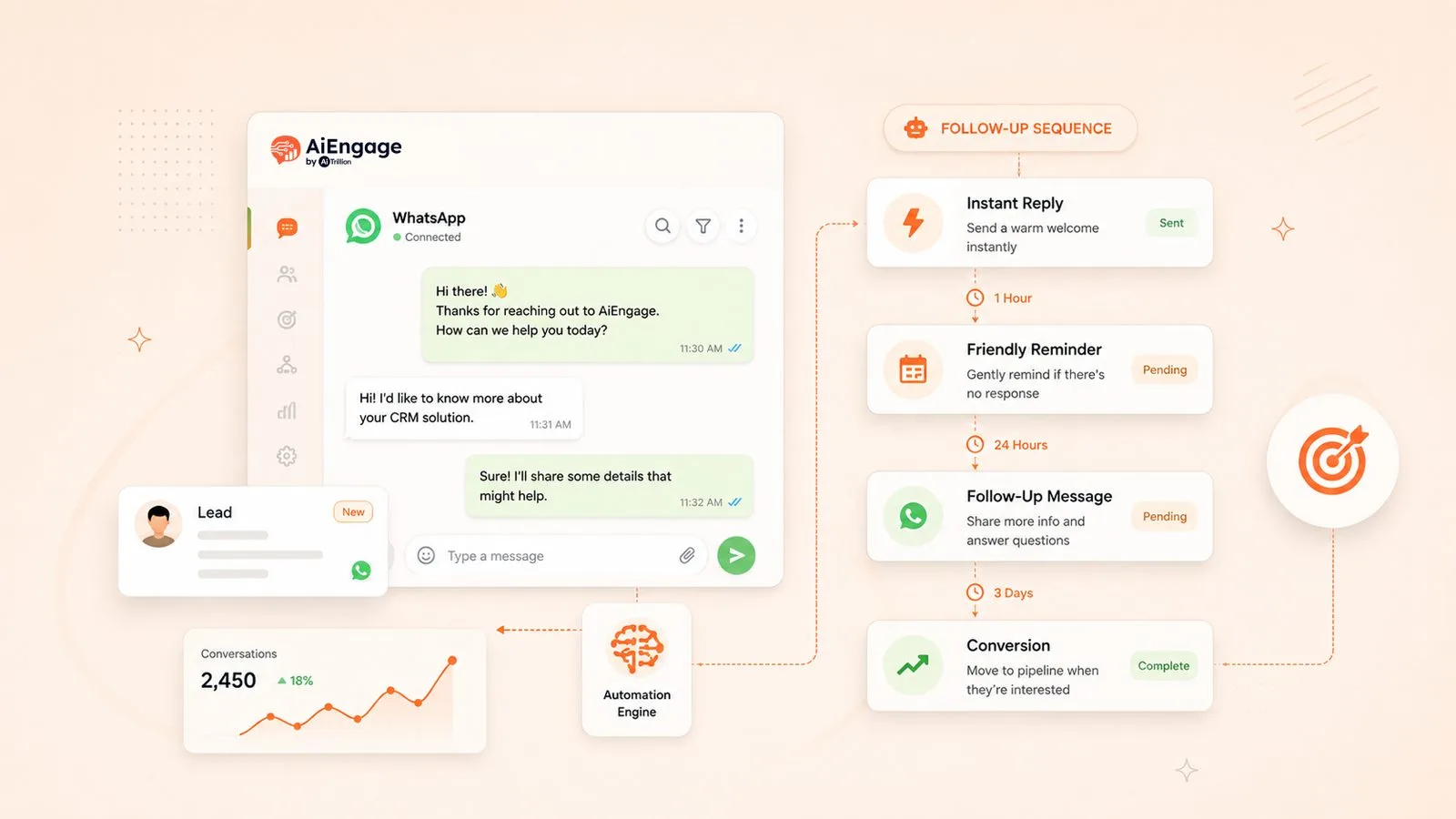
AiEngage is built around the idea that most agency leads arrive through conversation, not forms, so the whole platform is organized around WhatsApp, email, and calls first, with AI doing the early qualifying work before a human ever has to jump in.
It's a natural fit for teams tired of stitching together a separate WhatsApp tool, a separate inbox, and a spreadsheet just to see the full picture of one merchant relationship.
Pricing: Free for up to 100 Active Contacts (per user); Solo plan at $19/month for one user (up to 5,000 contacts), Business at $65/month for up to 5 users, Business Pro at $99/month for up to 10 users, all with a 14-day free trial and no credit card required.
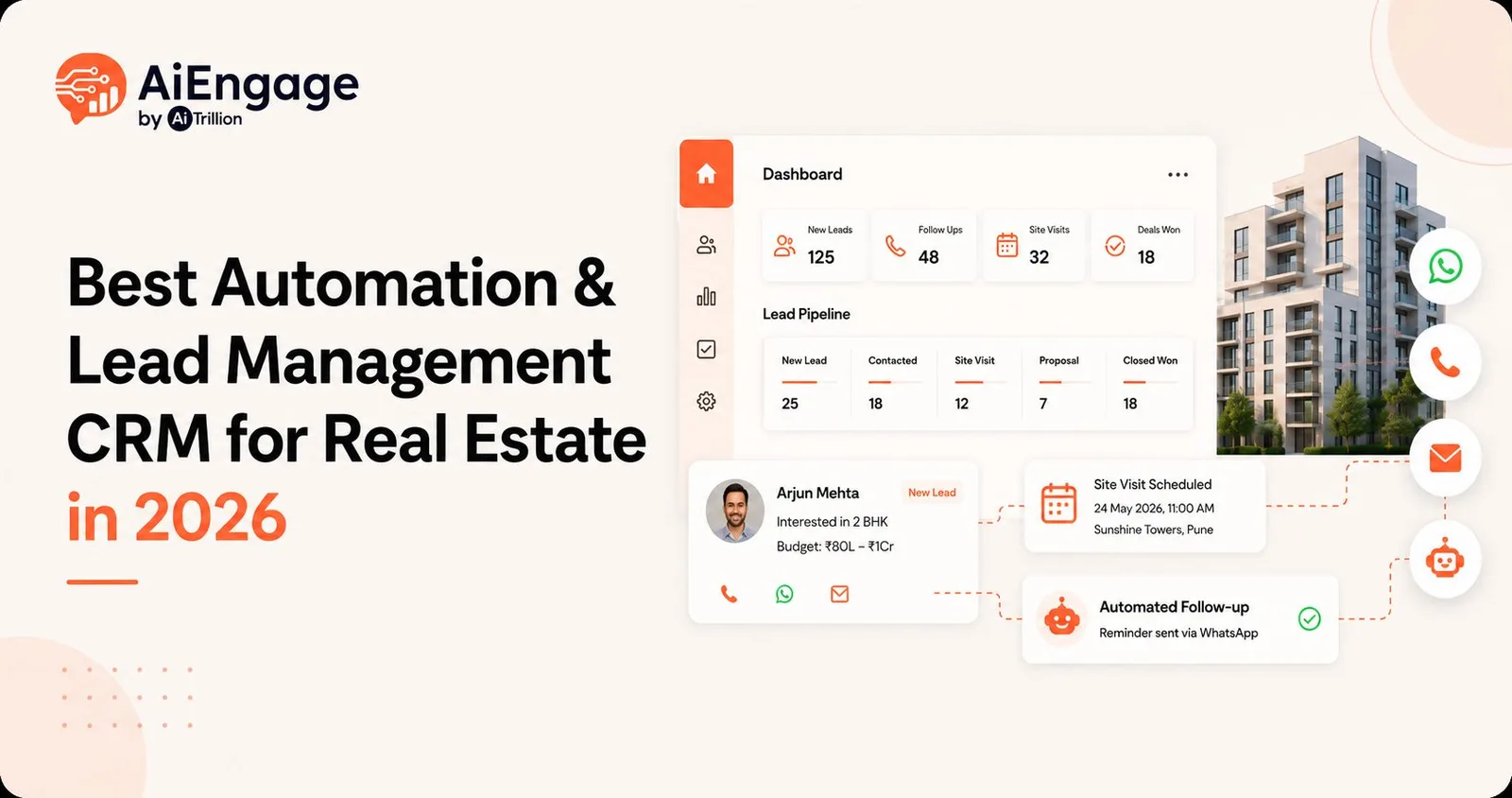
Key features: Unified inbox for WhatsApp, email, calls, and ads; AI lead scoring and a WhatsApp AI agent that qualifies leads automatically; custom pipelines, invoicing, and automated follow-up sequences.
Where it fits: An agency CRM for managing Shopify merchant clients who reach out across three different channels before a human ever replies.
Worth knowing: Best suited to teams that want automation working from the first inquiry onward, rather than a heavier marketing suite bolted on top.
2. HubSpot Sales Hub
HubSpot is the CRM most agencies have already heard of, and for good reason: it's mature, well-documented, and genuinely strong once you're running marketing campaigns alongside your development work.
The tradeoff is that its pricing model rewards teams that already know exactly which seats and hubs they need, since costs climb quickly once you go past the free tier.
Pricing: A free CRM tier to start; Starter runs $45/seat/month, and enterprise jumps to roughly $75–100/seat/month plus a one-time $1,500 onboarding fee.
Key features: Deep marketing automation, strong reporting, a huge app marketplace, and solid email and forms tooling built for full-funnel visibility.
Where it fits: Agencies already running paid campaigns alongside development work, who want sales and marketing under one roof.
Worth knowing: WhatsApp support usually needs a third-party add-on, and the gap between Starter and Professional pricing catches a lot of buyers off guard.
3. Zoho CRM
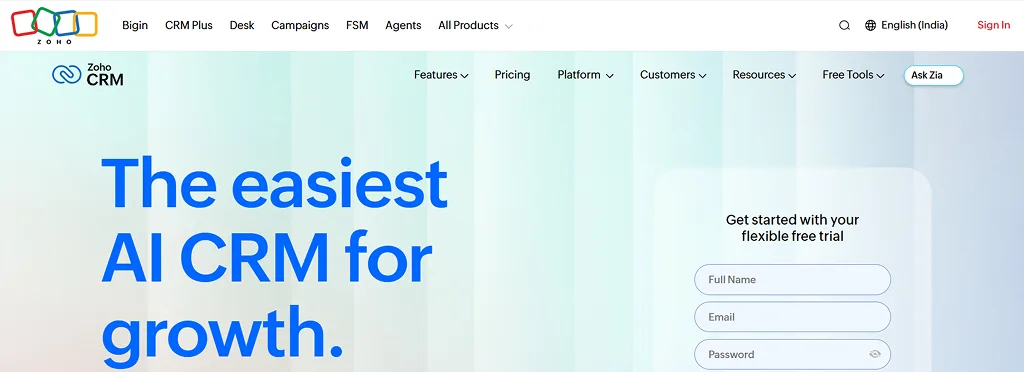
Zoho earns its reputation as the value pick: a genuinely usable free tier, low entry pricing, and tight integration if your agency is already invoicing or ticketing through other Zoho apps.
It won't feel as polished out of the box as some newer tools, but for teams watching budget closely, it's hard to beat on a features-per-rupee basis.
Pricing: Free for up to 3 users; Standard at $14/user/month, Professional at $23/user/month, Enterprise at $40/user/month (all billed annually).
Key features: Solid pipeline management, the Zia AI assistant for predictive scoring, and deep integration across the wider Zoho suite: Books, Desk, Campaigns.
Where it fits: Teams already invoicing or ticketing through Zoho who want their CRM to plug into the same ecosystem.
Worth knowing: Setup and configuration can take longer to feel intuitive compared to more purpose-built agency tools.
4. Intercom
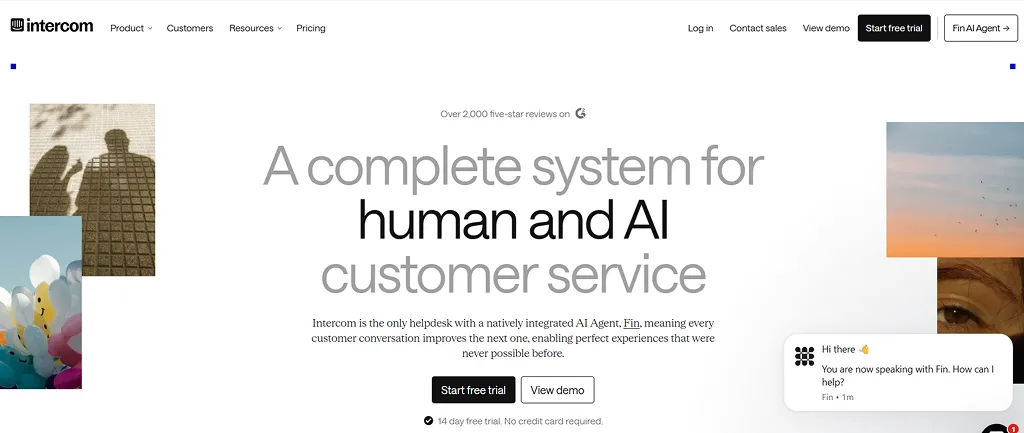
Intercom isn't really trying to be a sales CRM; it's a support and messaging platform that happens to be excellent at the part of the relationship that starts after a merchant installs your app.
Agencies that need to answer product questions at scale, without hiring more support staff, tend to reach for it as a layer on top of whatever runs their pipeline.
Pricing: Essential at $29/seat/month billed annually, Advanced at $85/seat/month, Expert at $132/seat/month, plus a separate $0.99 charge per resolution if you turn on the Fin AI agent.
Key features: In-app and website live chat, the Fin AI chatbot, workflow automation, and strong post-install support routing.
Where it fits: Talking to merchants after they've installed your Shopify app, not running your sales pipeline.
Worth knowing: It's a support layer, not a full CRM, and usage-based AI fees can add up fast for support-heavy teams.
5. TeleCRM
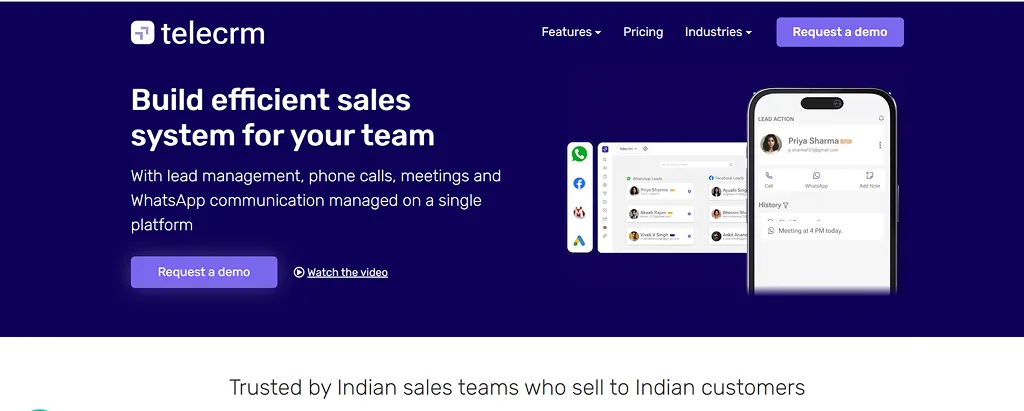
TeleCRM was built specifically for how a lot of Indian sales teams actually work, dialing from a phone, following up on WhatsApp, and rarely opening email. If that's your agency's rhythm, the simplicity here is a feature, not a limitation.
Pricing: $19 per user per month billed annually, with unlimited contacts on the Pro plan.
Key features: Built-in auto-dialer with call recording, WhatsApp-first follow-ups, automatic lead capture from platforms like IndiaMart, Facebook Ads, and Google Ads, and straightforward team performance tracking.
Where it fits: A Shopify CRM for wholesale and B2B sales teams where phone and WhatsApp, not email, drive most conversations.
Worth knowing: AI depth is lighter than newer entrants, so it suits teams who want reliable basics over advanced automation.
If most of your inbound runs through WhatsApp and calls, a Shopify CRM for wholesale and B2B sales teams setup will feel far more natural than a form-heavy tool built for Western SaaS funnels, especially for agencies selling to wholesale merchants, where deal sizes are bigger and a missed follow-up costs more.
Real Results: What Agencies Say After Switching
The numbers matter less than what actually changes on a Tuesday afternoon when a lead comes in. Here's what that shift usually sounds like, in the words of agencies who've made it:
"Our leads were spread across the Shopify App Store, Upwork, and referrals; it was chaos. Since moving to a proper CRM, everything sits in one pipeline, and our team finally has a clear view of every client conversation."
— Rohit Agrawal, Founder, Shopify Development Agency
"We were getting inquiries from our app listing, WhatsApp, and email, and half of them fell through the cracks. After switching, follow-ups became automatic, and we started closing deals noticeably faster."
— Anil Jain, Sales Lead, Shopify Partner Agency
How to Choose the Right CRM Based on Your Agency's Size
Agency Stage | Recommended Approach | Why |
|---|---|---|
Solo freelancer / 1–3 people | Lightweight CRM (AiEngage Solo, Zoho free tier) | Needs speed and simplicity over depth |
Growing agency (5–20 people) | AiEngage Business, HubSpot Starter, or TeleCRM by channel mix | Needs role-based access and automation |
Established agency (20+ people) | HubSpot Professional or AiEngage Business Pro, Intercom layered in | Needs reporting depth and cross-team visibility |
Buy for the leads you actually get, not the leads you hope to get someday.
How to Migrate Your Agency's Leads to a New CRM
Migration is the step most agencies put off, worried it'll mean a chaotic week of double data entry. Done in the right order, it's closer to five afternoons than five weeks.
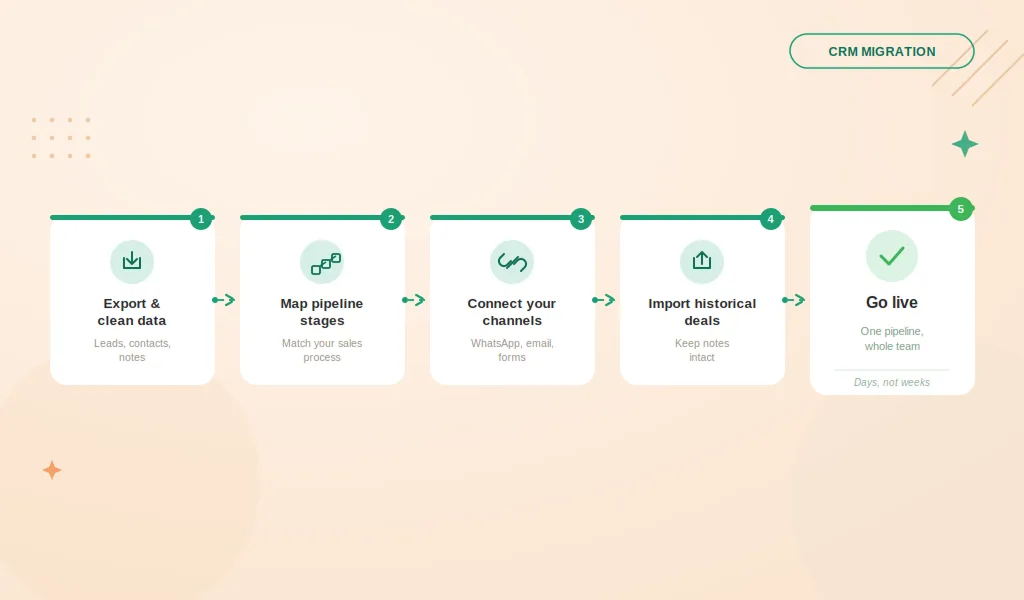
Don't migrate everything at once; start with active deals, then backfill history. Test your CRM with Shopify App Store data sync setup on a handful of real leads before switching the whole team, so mapping errors show up early instead of after your first missed follow-up.
A clean Shopify app developer CRM integration turns migration into a matter of days, not weeks, and keeps your team out of two systems at once.
Conclusion
There's no single "best" CRM here; it depends on how your leads actually arrive and what you're willing to pay for depth versus simplicity. HubSpot suits marketing depth, Zoho suits Zoho-ecosystem teams on a budget, Intercom handles post-sale support, TeleCRM fits call-heavy teams, and for agencies wanting one unified inbox with AI doing the qualifying legwork, AiEngage CRM is built for exactly that.
Whichever you pick, the goal is the same: a best CRM for Shopify apps and partner agencies answer that fits how your team actually works, not a leaderboard ranking.
Reyansh's agency eventually fixed its process, not by working harder, but by giving every channel one home. If your team is still piecing together leads from five apps at midnight, it might be time to do the same.
Book a demo with AiEngage CRM and see what a unified pipeline could look like for your agency.
FAQs
Which CRM works best with Shopify?
It depends on your workflow. Heavy WhatsApp and multichannel teams tend to do well with AiEngage CRM or TeleCRM; larger teams wanting marketing bundled in often pick HubSpot; budget-conscious teams already on Zoho lean toward Zoho CRM; and support-heavy app businesses usually add Intercom alongside a CRM rather than instead of one.
Is AI going to replace CRM?
No, AI is becoming a layer inside CRMs, not a replacement for them. Tools now handle lead scoring, auto-replies, and follow-up automation, but the core job, storing structured data your whole team can act on, still needs a system of record underneath the AI.
Do you really need a CRM in 2026?
If leads arrive from more than one channel, or more than one person touches a deal, yes. Spreadsheets and shared inboxes break down fast past that point, usually right around where Reyansh's agency was.
How much does a CRM for a Shopify agency typically cost?
It ranges widely: Zoho and TeleCRM start under $15–20/user/month equivalent, AiEngage's Solo plan runs about $21/month (₹1,799), and HubSpot or Intercom can climb past $85–100/seat/month once you need Professional-tier features. Most tools worth considering offer a free trial, so you can test fit before committing to an annual plan.
Can a CRM connect directly with the Shopify App Store?
Some can, through APIs or webhooks that pull App Store inquiries straight into your pipeline instead of a separate developer dashboard. If this matters to you, and it usually does for any serious B2B CRM for Shopify partner ecosystem setup, confirm the specific integration during a demo rather than assuming it's included by default.